
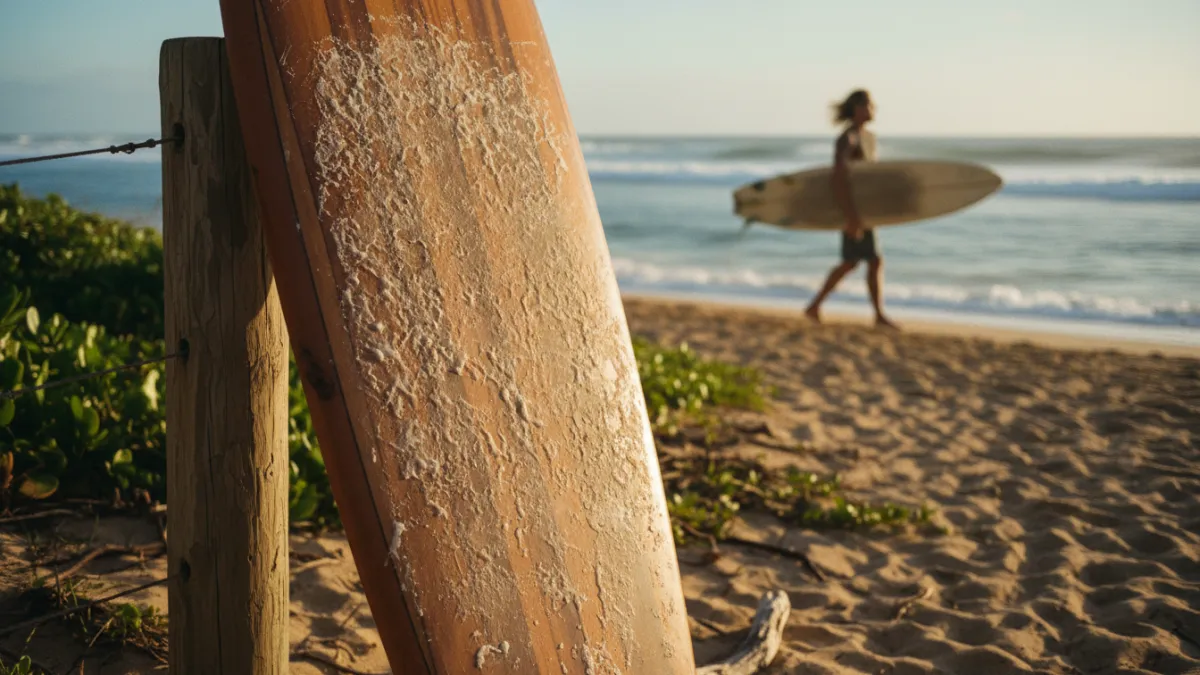
Most visitors assume the North Shore is reserved for professionals. That assumption costs them the best surf experience in Hawaii. The right surf school or rental operator changes everything — and knowing which one to choose is where most travelers fail.
La riche culture surf de Oahu
Oahu's surf culture isn't a backdrop — it's a living system with roots, economics, and community logic that shapes every wave you'll ride on the North Shore.
Le patrimoine surf d'Oahu
Native Hawaiians didn't just practice surfing — they built its entire conceptual framework. Every modern competitive format, every big wave protocol, traces back to that original cultural architecture.
The 7-Mile Miracle on Oahu's North Shore concentrates this legacy into a single stretch of coastline. Understanding its mechanics helps you navigate it strategically:
- Banzai Pipeline breaks over a shallow reef, producing hollow, fast-moving barrels that demand precise positioning — entering the lineup without reading the sets first is the most common and costly mistake.
- Waimea Bay activates only when swells exceed 20 feet, making it a threshold venue rather than a daily destination.
- The Vans Triple Crown of Surfing was established to consolidate the North Shore's three premier contests into one competitive circuit, effectively turning the entire stretch into a ranked arena from November through December.
- Timing your visit around this window gives you access to peak swell conditions and professional-level surfing simultaneously.
L'impact du surf sur la communauté
Surf tourism is the North Shore's economic backbone. Every winter swell season pulls thousands of visitors to Oahu's seven-mile miracle, and that flow of revenue circulates directly through local businesses, accommodations, and food vendors.
The mechanism runs deeper than transactions. Local surf schools have built cultural education into their core programs, treating each lesson as a transmission of Hawaiian values alongside technique. You're not just learning to read a wave — you're absorbing the relationship between the ocean and the people who have lived beside it for generations.
This integration produces a compounding effect. Visitors who engage with culturally grounded schools spend more intentionally, support local instructors, and return. The community, in turn, maintains the authenticity that makes the North Shore worth visiting in the first place.
Surf culture here functions as infrastructure — social, economic, and cultural simultaneously. That's not a coincidence. It's the result of a community that has actively shaped how the outside world experiences its coastline.
That system — historical, competitive, and economic — is what makes the North Shore function as more than a destination. It operates as a model for how surf culture sustains itself.
Les cours de surf incontournables pour débutants
On the North Shore, the wrong first lesson doesn't just slow your progression — it ends it. Three schools, clear pricing structures, and real student outcomes define what quality instruction looks like here.
Choix d'écoles de surf
Reef breaks don't forgive improvisation. On the North Shore, a single poorly read wave can push you onto sharp coral — professional instruction isn't optional, it's the mechanism that keeps you in the water and out of the emergency room.
Three schools consistently deliver that safety margin:
- Hans Hedemann Surf School trains beginners through advanced surfers using progressive technique sequencing — each session builds on the last, so your muscle memory adapts before the ocean tests it.
- Uncle Bryan's Sunset Suratt Surf Academy pairs small group ratios with reef-specific coaching, meaning instructors can correct your positioning before a set wave arrives, not after.
- North Shore Oahu Surf School focuses on reading local conditions — understanding swell direction and tide timing directly reduces wipeout frequency.
Selecting a school based on instructor-to-student ratio matters more than price. The lower that ratio, the faster your progression — and the safer your exposure to North Shore's unforgiving breaks.
Coûts et options de cours
The price gap between private and group lessons is not cosmetic — it directly maps to the speed of your progression. A $225 private session gives you one instructor, zero distraction, and feedback calibrated to your exact mechanics. Group lessons trade that precision for affordability, placing you among 4 to 6 students for a fraction of the cost.
| Lesson Type | Price Range | Best For |
|---|---|---|
| Private Lesson | $225 | Fast-track progression, specific technique work |
| Group Lesson | $85 – $115 | Budget-conscious beginners, social learning |
| Semi-Private (2–3 students) | $140 – $175 | Balance between coaching depth and cost |
| Multi-Day Package (3 sessions) | $220 – $310 | Consistent skill-building over a full trip |
The semi-private format sits between both extremes — worth considering if you are traveling with a partner. Multi-day packages lower your per-session cost significantly, making them the sharper option for a week-long North Shore stay.
Retours des étudiants
The numbers speak for themselves: most students stand up and ride a wave within their first 2-hour session. That result isn't accidental. It comes from a structured progression that prioritizes body positioning, ocean reading, and instructor-to-student ratio before anyone touches a board.
What past students consistently flag, beyond the stand-up guarantee, is the cultural layer woven into every lesson. Technical skills and Hawaiian traditions are taught in parallel, not as an afterthought. You leave with an understanding of why surfing matters here, not just how to do it.
The personal attention is the variable that shifts outcomes. Smaller groups mean instructors can correct your stance in real time, not after you've repeated the same mistake ten times. That feedback loop is what compresses the learning curve into a single session.
For first-timers, that combination — guaranteed progression, cultural context, and direct coaching — is what separates a memorable experience from a frustrating one.
School selection, lesson format, and student results form a single decision chain. The next variable is where you actually surf — and that choice carries its own set of risks.
Astuces pour maximiser votre séjour
North Shore rewards preparation over spontaneity. Three variables — timing, sequencing, and local knowledge — determine whether your visit produces results or missed windows.
Activités à ne pas manquer
Surfing is only one layer of what North Shore delivers. The real strategic error is treating it as a single-activity destination.
- Snorkeling at Shark's Cove performs best in summer, when calmer waters maximize visibility and marine density — plan your session before 9 AM to avoid crowd saturation.
- Turtle watching at Laniakea Beach operates on the turtles' schedule, not yours. Arriving at low tide significantly increases your chances of a close encounter on the sand.
- Local markets along Kamehameha Highway concentrate authentic Hawaiian crafts and regional foods in one corridor — budget $30–$50 for a meaningful haul.
- Combining Shark's Cove snorkeling with a Laniakea stop creates a single northern loop that covers both sites in under three hours.
- Timing is the variable that separates a productive day from a frustrating one. Build your itinerary around tidal charts and seasonal water conditions, not convenience.
Sites emblématiques à découvrir
Waimea Bay sets the standard for North Shore spectacle. In winter, swells regularly exceed 20 feet, drawing the world's best big-wave surfers to its shores. The bay's geography — a deep underwater shelf that abruptly rises — compresses incoming energy into walls of water that are technically unforgiving. Spectators line the beach by the hundreds on peak swell days, making it one of Oahu's most charged natural arenas.
The cultural counterpoint sits a few miles down Kamehameha Highway. Matsumoto Shave Ice has operated in Haleiwa since 1951, and its reputation among locals is built on consistency, not novelty. The flavors run deep — li hing mui, lychee, passion fruit — reflecting a culinary tradition rooted in Hawaii's plantation-era history. A visit here isn't a tourist checkbox. It's a direct read on how North Shore communities have preserved their identity alongside the surf industry's global expansion.
Stack these variables correctly, and North Shore stops being a destination you visit. It becomes one you actually read.
Les règles de savoir-vivre sur les vagues
The lineup has its own hierarchy. Ignore it, and you won't just frustrate local surfers — you risk a confrontation that ends your session early.
Priority rules are the backbone of surf etiquette. The surfer closest to the peak, already committed to the wave, has the right of way. Dropping in on that surfer — taking off in front of them — is the single most common mistake visiting surfers make. It creates dangerous collisions and signals immediately that you don't belong.
Local surfers at spots like Pipeline or Sunset Beach have often surfed that break for decades. They read the swell, know the channels, and operate within an unspoken social contract. Your role as a visitor is to observe that dynamic before paddling into the rotation.
Positioning matters. Sitting too deep in the lineup when you haven't earned that spot generates tension. Start on the shoulder, read how waves are shared, and let the rhythm of the lineup guide your movement inward over time.
Respect here isn't abstract courtesy — it's a functional mechanism that keeps 30 surfers on the same peak from becoming a collision zone. Follow the priority rules, stay aware of local surfers and their space, and your sessions will run smoother than those of 90% of visiting surfers.
The North Shore delivers a surf education no classroom can replicate. Book your lesson during the shoulder season — April or October — for smaller crowds and consistent swells that match beginner and intermediate skill levels precisely.
Questions fréquentes
Is one surf lesson enough to surf the North Shore on my own?
One lesson gets you standing. It does not teach wave priority rules or reef navigation. Those skills require multiple sessions. Surfing unsupervised on a reef break before mastering them is the most common mistake beginners make.
Can beginners swim or surf on the North Shore during winter months?
Between November and February, waves at spots like Waimea Bay regularly hit 30 to 50 feet. Swimming is often prohibited by lifeguards. Beginner lessons operate exclusively in sheltered locations like Puaena Point, where conditions remain manageable year-round.
What do I actually need to bring to a North Shore surf lesson?
A swimsuit, a towel, and reef-safe sunscreen cover everything. The school provides the soft-top board, leash, and rash guard. Arriving without sunscreen is the one oversight that consistently derails an otherwise well-prepared student.